

Pentecostalism and the Reinvention of Development in Brazil’s Urban Peripheries


The Latin American Geographies Research Group is delighted to announce that the 2025 Undergraduate Dissertation Prize has been awarded to Louis Mancini-Pecnard (University College London) for his dissertation: “Whispers of Faith: Pentecostalism and the Reinvention of Development in Brazil’s Urban Peripheries.” This thought-provoking research explores how Pentecostalism shapes understandings of poverty and development in Brazil’s urban margins. This post summarises his work.
Religion permeates Brazilian society, visible in everyday expressions like “Vai com Deus,” religious statues in homes and streets, and popular customs such as turning Santo Antônio upside down to find a partner. Historically Catholic, Brazil’s religious landscape has long blended Afro-Brazilian traditions, Spiritism, and Indigenous cosmologies.


In recent decades, Evangelicalism has surged, now comprising 26.9% of the population and projected to surpass Catholicism (IBGE 2025). The term evangélico spans Protestant traditions from Baptist and Presbyterian to charismatic movements like Pentecostalism, Neo-Pentecostal prosperity churches (e.g., Igreja Universal do Reino de Deus), and non-denominational congregations (Schmidt & Engler 2017). Among these, Pentecostalism has grown most rapidly (Alves 2017). Decentralised and rooted in local communities, it emphasises personal experiences, divine messages, and encounters with the Holy Spirit (Oliveira & Rocha 2018; Palhares 2019).
This dissertation examined Pentecostalism’s spatial, social, and religious impacts in poor urban peripheries, where it remains concentrated in the “margins of the margin” (Oliveira & Rocha 2018: 732), linked to processes of segregation, displacement, and migration (Fajardo 2011). Its theology sacralises all spaces, enabling informal territorialities and churches in areas lacking formal infrastructure (Senra & Leite 2019; Cruz 2018).
The research addressed a gap: how religious experiences intersect with understandings of poverty and development? Drawing on development geography and Religion and Development (RaD), it challenged dominant theories framing poverty as a symptom of low growth and “modernisation” (Horner 2020; Chant & McIlwaine 2009). Such views ignore poverty’s multidimensional nature, while indices like HDI and MPI rest on normative assumptions (Hannah 2024; Camfield 2014). Scholars advocate phenomenological approaches centring lived experiences (Wetengere et al. 2022), as seen in Voices of the Poor (Narayan et al. 2000) and Hidden Dimensions of Poverty (Bray et al. 2019).
Religion is central to these experiences, yet most RaD studies treat it instrumentally—assessing its role in achieving development goals (Wilkinson 2022; Tomalin 2020). Few explore everyday religious meanings shaping life in poverty. This dissertation fills that gap by using religion as an analytical lens to understand development in Brazil’s urban peripheries.
Fieldwork and Key Findings

This research drew on fieldwork conducted between July and September 2024 in Cidade Estrutural, a community within Brazil’s Federal District. Founded in the 1960s around Latin America’s largest open-air landfill, the area grew as migrants settled to work as waste pickers (Guimarães 2023). Despite the landfill’s closure in 2018, Cidade Estrutural remains among the poorest regions in the Federal District, with the lowest per capita income (R$695.37), high multidimensional poverty, and persistent challenges in accessing water, food, and basic services (PDAD 2021).
In this context, where Evangelical churches are ubiquitous, I focused on one congregation: Assembleia de Deus de Taguatinga, Ministério de Madureira (ADTAG), part of Brazil’s largest Evangelical denomination. ADTAG operates three churches locally and is linked to a wider network across the Federal District. I conducted 24 semi-structured interviews with members, encouraging participants to define poverty and elaborate on their own visions of development. Religious dimensions emerged organically, as participants connected spiritual and material realities.
Findings reveal poverty as complex and relational, encompassing low income, inadequate housing, poor healthcare, costly medicine, food insecurity, limited education, and multiple burdens of work and family care. Beyond material deprivation, participants highlighted “spiritual suffering”—a deep inner wound attributed to malevolent forces, experiences of “unlove” (indifference, rejection, violence), and the inability to build a community aligned with God’s plan.

This suffering fosters disempowerment, loss of hope, and what some called the “spirit of poverty,” manifesting in addiction, crime, and fractured social ties. At the collective level, it perpetuates cycles of violence and isolation, reinforcing poverty’s material and spiritual dimensions.
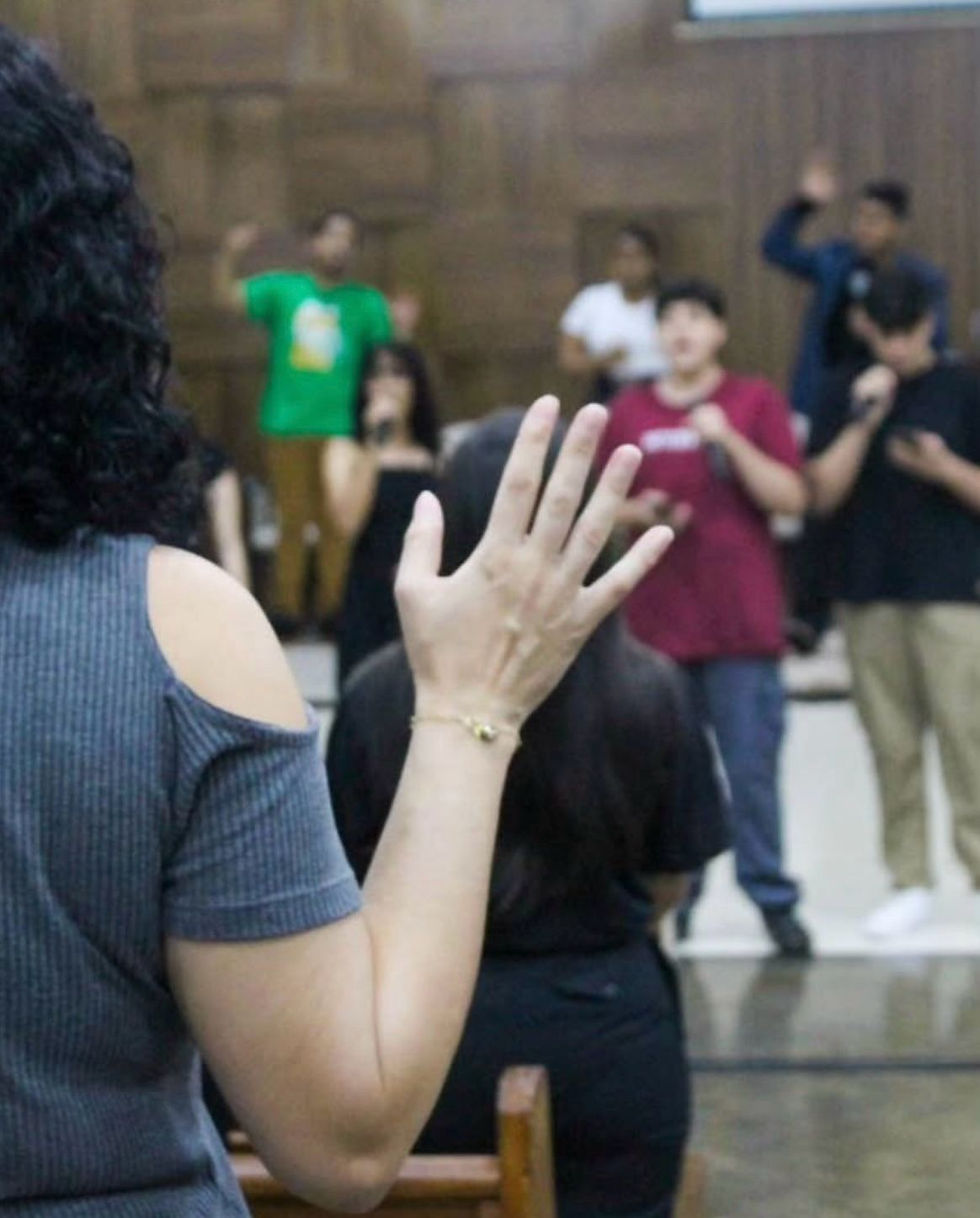
Participants reimagined development as inseparable from spiritual transformation. While structural improvements—sanitation, healthcare, education, economic opportunities—were deemed essential, they stressed that true change requires “spiritual rescue,” “healing,” and “transformation.” Encounters with God’s word, prayer, and experiences with the Holy Spirit were seen as vital to restoring purpose, resilience, and hope. Belonging to the church community was central, offering mutual support and empowerment across spiritual, social, and economic spheres.
These insights challenge conventional development frameworks, highlighting the need to integrate spiritual perspectives and explore collaborations between secular institutions, churches, and peripheral communities to realise locally envisioned forms of empowerment.
References
Alves, L.M. (2017) Pentecostalism in Brazil. In: H. Gooren Encyclopedia of Latin American Religions. New York City: Springer International Publishing.
Bray, R., M. De Laat, X. Godinot, A. Ugarte, and R. Walker (2019) The Hidden Dimensions of Poverty. Montreuil: Fourth World Publications.
Camfield, L. (2014) Qualitative Indicators of Development. In: Michalos, A.C. (ed.) In: A.C. Michalos Encyclopedia of Quality of Life and Well-Being Research. Dordrecht: Springer.
Chant, S. and C. McIlwaine (2009) Geographies of Development in the 21st Century. Cheltenham: Edward Elgar.
Cruz, D.M. (2018) Geografia da religião, fé evangélica e espaço. Geosaberes, 9(18): 1-17.
Fajardo, M. P. (2011) Pentecostalismo, Urbanização e Periferia: Perspectivas Teóricas. Paralellus, 2(4): 181-192.
Guimarães, M.O. (2023) Lixo Capital: de aterro sanitário a cidade estrutural (1964-2020). In: A.M. Costa, S. Prata, J.B. Cuesta-Gómez, A.D. Cardoso, and H. Silva Pequenas Cidades no Tempo: a saúde. Lisboa: Instituto de Estudos Medievais (IEM), Centro de Humanidades (CHAM), and Instituto de História Contemporânea (IHC).
Hannah, J. (2024) Invisible Struggles: Hidden Aspects of Urban Poverty. Journal of International Social Research, 17(108): 1-5.
Horner, R. (2020) Towards a new paradigm of global development? Beyond the limits of international development. Progress in Human Geography, 44(3): 415-436.
IBGE (2025) Censo 2022 PANORAMA [Online]. Available https://censo2022.ibge.gov.br/panorama/indicadores.html?localidade=BR&tema=10 [Accessed 23 Jun. 2025].
Narayan, D., R. Patel, and K. Schafft, A. Rademacher (2000a) Voices of the poor: Can anyone hear us? New York: Oxford University Press For The World Bank.
Oliveira, D.M. and A. Rocha (2018) Pentecostalismo e empoderamento de identidades marginalizadas. Revista Pistis & Prax, 10(3): 722-741.
Palhares, R.H. (2019) A mudança no cenário religioso brasileiro: o rearranjo espacial do movimento pentecostal. Revista Verde Grande: Geografia E Interdisciplinaridade, 1(2): 19–29.
PDAD (2021) 2021: Pesquisa feita em domicílios. CODEPLAN [Online]. Available at: www.codeplan.df.gov.br [Accessed 12 Feb. 2025].
Schmidt, B. and S. Engler (2017) (ed.) Handbook of Contemporary Religions in Brazil. Leiden: BRILL.
Senra, F. and B.T.S. Leite (2019) Senso Religioso em Transformação nas Periferias das Grandes Cidades. Caminhos - Revista de Ciências da Religião, 17(2): 709-726.
Tomalin, E. (2020) Religions and development: a paradigm shift or business as usual? Religion, 51(1): 105-124.
Wetengere, K., F. Kashagara, C. Saasita (2022) Applying “merging of knowledge” to disclose the hidden dimensions of poverty in mainland Tanzania. University of Arusha Academic Journal, 1(1): 1-17.
Wilkinson, O. (2022) Re-framing Common Themes in Religions and Development Research. The Review of Faith & International Affairs, 20(4): 91-106.


Comments